But afterwards Alexander carried off Helen, as some say, because such was the will of Zeus, in order that his daughter might be famous for having embroiled Europe and Asia; or, as others have said, that the race of the demigods might be exalted.
For one of these reasons Strife threw an apple as a prize of beauty to be contended for by Hera, Athena, and Aphrodite; and Zeus commanded Hermes to lead them to Alexander on Ida in order to be judged by him. And they promised to give Alexander gifts. Hera said that if she were preferred to all women, she would give him the kingdom over all men; and Athena promised victory in war, and Aphrodite the hand of Helen. And he decided in favour of Aphrodite ; and sailed away to Sparta with ships built by Phereclus.
For nine days he was entertained by Menelaus; but on the tenth day, Menelaus having gone on a journey to Crete to perform the obsequies of his mother's father Catreus, Alexander persuaded Helen to go off with him. And she abandoned Hermione, then nine years old, and putting most of the property on board, she set sail with him by night.
But Hera sent them a heavy storm which forced them to put in at Sidon. And fearing lest he should be pursued, Alexander spent much time in Phoenicia and Cyprus. But when he thought that all chance of pursuit was over, he came to Troy with Helen.
But some say that Hermes, in obedience to the will of Zeus, stole Helen and carried her to Egypt, and gave her to Proteus, king of the Egyptians, to guard, and that Alexander repaired to Troy with a phantom of Helen fashioned out of clouds.
When Menelaus was aware of the rape, he came to Agamemnon at Mycenae, and begged him to muster an army against Troy and to raise levies in Greece. And he, sending a herald to each of the kings, reminded them of the oaths which they had sworn, and warned them to look to the safety each of his own wife, saying that the affront had been offered equally to the whole of Greece. And while many were eager to join in the expedition, some repaired also to Ulysses in Ithaca.
But he, not wishing to go to the war, feigned madness. However, Palamedes, son of Nauplius, proved his madness to be fictitious; and when Ulysses pretended to rave, Palamedes followed him, and snatching Telemachus from Penelope's bosom, drew his sword as if he would kill him. And in his fear for the child Ulysses confessed that his madness was pretended, and he went to the war.
Having taken a Phrygian prisoner, Ulysses compelled him to write a letter of treasonable purport ostensibly sent by Priam to Palamedes; and having buried gold in the quarters of Palamedes, he dropped the letter in the camp. Agamemnon read the letter, found the gold, and delivered up Palamedes to the allies to be stoned as a traitor.
Menelaus went with Ulysses and Talthybius to Cinyras in Cyprus and tried to persuade him to join the allies. He made a present of breastplates to the absent Agamemnon, and swore he would send fifty ships, but he sent only one, commanded by the son of Mygdalion, and the rest he moulded out of earth and launched them in the sea.
The daughters of Anius, the son of Apollo, to wit, Elais, Spermo, and Oeno, are called the Wine-growers: Dionysus granted them the power of producing oil, corn, and wine from the earth.
The armament mustered in Aulis. The men who went to the Trojan war were as follows :- Of the Boeotians, ten leaders: they brought forty ships. Of the Orchomenians, four: they brought thirty ships. Of the Phocians, four leaders: they brought forty ships. Of the Locrians, Ajax, son of Oeleus: he brought forty ships. Of the Euboeans, Elephenor, son of Chalcodon and Alcyone: he brought forty ships. Of the Athenians, Menestheus: he brought fifty ships. Of the Salaminians, Telamonian Ajax: he brought twelve ships.
Of the Argives, Diomedes, son of Tydeus, and his company: they brought eighty ships. Of the Mycenaeans, Agamemnon, son of Atreus and Aerope: a hundred ships. Of the Lacedaemonians, Menelaus, son of Atreus and Aerope: sixty ships. Of the Pylians, Nestor, son of Neleus and Chloris: forty ships. Of the Arcadians, Agapenor: seven ships. Of the Eleans, Amphimachus and his company: forty ships. Of the Dulichians, Meges, son of Phyleus: forty ships. Of the Cephallenians, Ulysses, son of Laertes and Anticlia: twelve ships. Of the Aetolians, Thoas, son of Andraemon and Gorge: he brought forty ships.
Of the Cretans, Idomeneus, son of Deucalion: forty ships. Of the Rhodians, Tlepolemus, son of Hercules and Astyoche: nine ships. Of the Symaeans, Nireus, son of Charopus: three ships. Of the Coans, Phidippus and Antiphus, the sons of Thessalus: thirty ships.
Of the Myrmidons, Achilles, son of Peleus and Thetis: fifty ships. From Phylace, Protesilaus, son of Iphiclus: forty ships. Of the Pheraeans, Eumelus, son of Admetus: eleven ships. Of the Olizonians, Philoctetes, son of Poeas: seven ships. Of the Aeanianians, Guneus, son of Ocytus: twenty-two ships. Of the Triccaeans, Podalirius:thirty ships. Of the Ormenians, Eurypylus: forty ships. Of the Gyrtonians, Polypoetes, son of Pirithous: thirty ships. Of the Magnesians, Prothous, son of Tenthredon: forty ships. The total of ships was one thousand and thirteen; of leaders, forty-three; of leaderships, thirty.
5アウリスの蛇
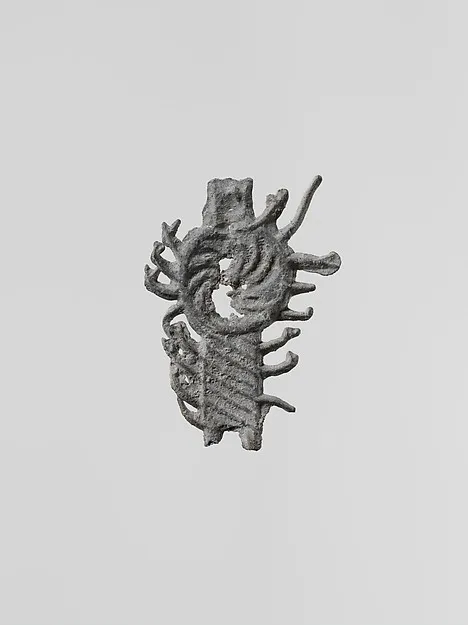
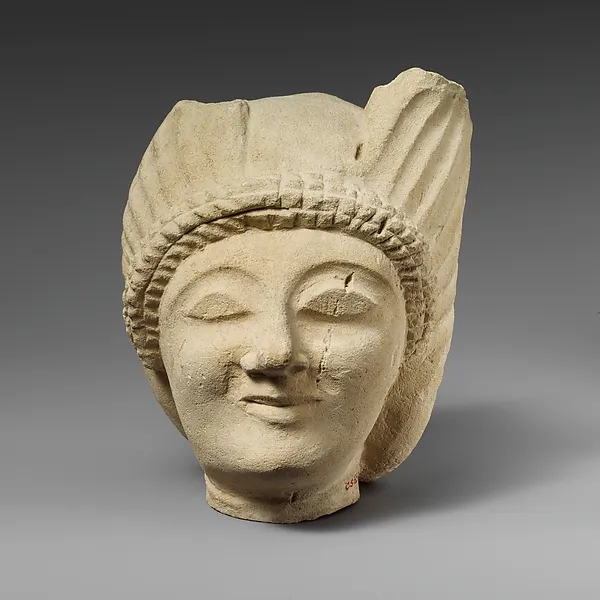
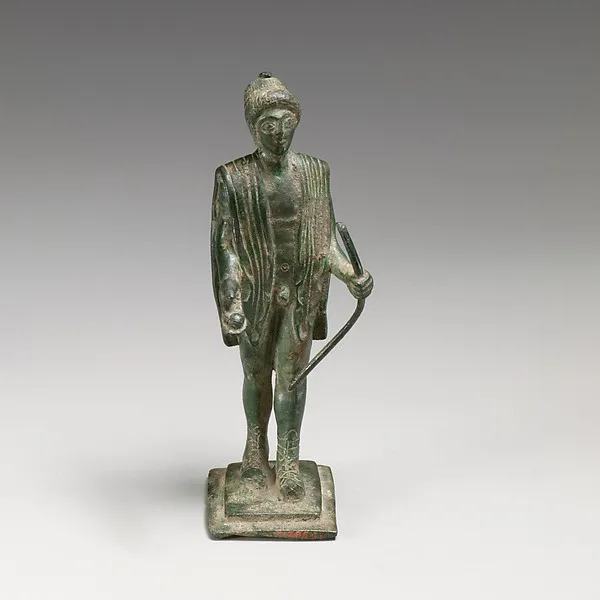
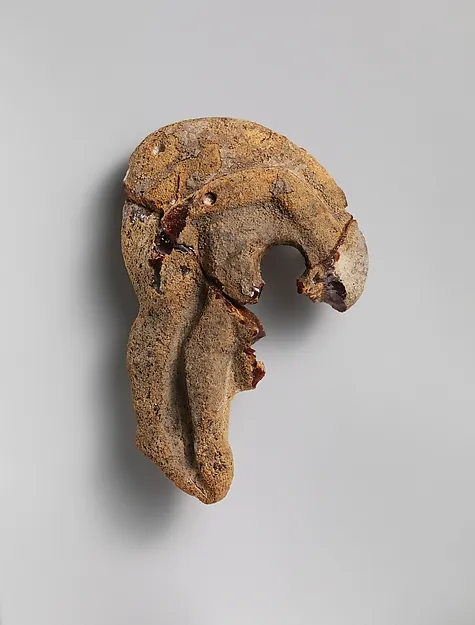
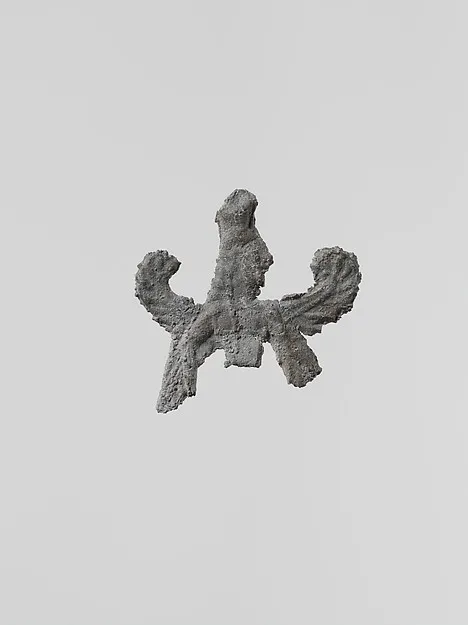
6th–5th century BCE アキレウスの遺骸を運ぶアイアス(ペンダント) この章に出てくる人物の図像。場面は対応していない→ この人物のページE.3.15
When the armament was in Aulis, after a sacrifice to Apollo, a serpent darted from the altar beside the neighboring plane-tree, in which there was a nest; and having consumed the eight sparrows in the nest, together with the mother bird, which made the ninth, it was turned to stone. Calchas said that this sign was given them by the will of Zeus, and he inferred from what had happened that Troy was destined to be taken in a period of ten years. And they made ready to sail against Troy.
But not knowing the course to steer for Troy, they put in to Mysia and ravaged it, supposing it to be Troy. Now Telephus son of Hercules, was king of the Mysians, and seeing the country pillaged, he armed the Mysians, chased the Greeks in a crowd to the ships, and killed many, among them Thersander, son of Polynices, who had made a stand. But when Achilles rushed at him, Telephus did not abide the onset and was pursued, and in the pursuit he was entangled in a vine-branch and wounded with a spear in the thigh.
Departing from Mysia, the Greeks put to sea, and a violent storm coming on, they were separated from each other and landed in their own countries. So the Greeks returned at that time, and it is said that the war lasted twenty years. For it was in the second year after the rape of Helen that the Greeks, having completed their preparations, set out on the expedition and after their retirement from Mysia to Greece eight years elapsed before they again returned to Argos and came to Aulis.
Having again assembled at Aulis after the aforesaid interval of eight years, they were in great perplexity about the voyage, because they had no leader who could show them the way to Troy.
But Telephus, because his wound was unhealed, and Apollo had told him that he would be cured when the one who wounded him should turn physician, came from Mysia to Argos, clad in rags, and begged the help of Achilles, promising to show the course to steer for Troy. So Achilles healed him by scraping off the rust of his Pelian spear. Accordingly, on being healed, Telephus showed the course to steer, and the accuracy of his information was confirmed by Calchas by means of his own art of divination.
But when they had put to sea from Argos and arrived for the second time at Aulis, the fleet was windbound, and Calchas said that they could not sail unless the fairest of Agamemnon's daughters were presented as a sacrifice to Artemis; for the goddess was angry with Agamemnon, both because, on shooting a deer, he had said, Artemis herself could not (do it better), and because Atreus had not sacrificed to her the golden lamb.
On receipt of this oracle, Agamemnon sent Ulysses and Talthybius to Clytaemnestra and asked for Iphigenia, alleging a promise of his to give her to Achilles to wife in reward for his military service. So Clytaemnestra sent her, and Agamemnon set her beside the altar, and was about to slaughter her, when Artemis carried her off to the Taurians and appointed her to be her priestess, substituting a deer for her at the altar; but some say that Artemis made her immortal.
After putting to sea from Aulis they touched at Tenedos. It was ruled by Tenes, son of Cycnus and Proclia, but according to some, he was a son of Apollo. He dwelt there because he had been banished by his father.
For Cycnus had a son Tenes and a daughter Hemithea by Proclia, daughter of Laomedon, but he afterwards married Philonome, daughter of Tragasus; and she fell in love with Tenes, and, failing to seduce him, falsely accused him to Cycnus of attempting to debauch her, and in witness of it she produced a flute-player, by name Eumolpus.
Cycnus believed her, and putting him and his sister in a chest he set them adrift on the sea. The chest was washed up on the island of Leucophrys, and Tenes landed and settled in the island, and called it Tenedos after himself. But Cycnus afterwards learning the truth, stoned the flute-player to death and buried his wife alive in the earth.
So when the Greeks were standing in for Tenedos, Tenes saw them and tried to keep them off by throwing stones, but was killed by Achilles with a sword-cut in the breast, though Thetis had forewarned Achilles not to kill Tenes, because he himself would die by the hand of Apollo if he slew Tenes.
and as they were offering a sacrifice to Apollo, a water-snake approached from the altar and bit Philoctetes; and as the sore did not heal and grew noisome, the army could not endure the stench, and Ulysses, by the orders of Agamemnon, put him ashore on the island of Lemnos, with the bow of Hercules which he had in his possession; and there, by shooting birds with the bow, he subsisted in the wilderness.
Putting to sea from Tenedos they made sail for Troy, and sent Ulysses and Menelaus to demand the restoration of Helen and the property. But the Trojans, having summoned an assembly, not only refused to restore Helen, but threatened to kill the envoys.
These were, however, saved by Antenor ; but the Greeks, exasperated at the insolence of the barbarians, stood to arms and made sail against them. Now Thetis charged Achilles not to be the first to land from the ships, because the first to land would be the first to die. Being apprized of the hostile approach of the fleet, the barbarians marched in arms to the sea, and endeavored by throwing stones to prevent the landing.
Of the Greeks the first to land from his ship was Protesilaus, and having slain not a few of the barbarians, he fell by the hand of Hector. His wife Laodamia loved him even after his death, and she made an image of him and consorted with it. The gods had pity on her, and Hermes brought up Protesilaus from Hades. On seeing him, Laodamia thought it was himself returned from Troy, and she was glad; but when he was carried back to Hades, she stabbed herself to death.
On the death of Protesilaus, Achilles landed with the Myrmidons, and throwing a stone at the head of Cycnus, killed him. When the barbarians saw him dead, they fled to the city, and the Greeks, leaping from their ships, filled the plain with bodies. and having shut up the Trojans, they besieged them; and they drew up the ships.
The barbarians showing no courage, Achilles waylaid Troilus and slaughtered him in the sanctuary of Thymbraean Apollo, and coming by night to the city he captured Lycaon. Moreover, taking some of the chiefs with him, Achilles laid waste the country, and made his way to Ida to lift the kine of Aeneas. But Aeneas fled, and Achilles killed the neatherds and Nestor, son of Priam, and drove away the kine.
He also took Lesbos and Phocaea, then Colophon, and Smyrna, and Clazomenae, and Cyme; and afterwards Aegialus and Tenos, the so-called Hundred Cities; then, in order, Adramytium and Side; then Endium, and Linaeum, and Colone. He took also Hypoplacian Thebes and Lyrnessus, and further Antandrus, and many other cities.
A period of nine years having elapsed, allies came to join the Trojans : from the surrounding cities, Aeneas, son of Anchises, and with him Archelochus and Acamas, sons of Antenor, and Theanus, leaders of the Dardanians; of the Thracians, Acamas, son of Eusorus; of the Cicones, Euphemus, son of Troezenus; of the Paeonians, Pyraechmes; of the Paphlagonians, Pylaemenes, son of Bilsates;
from Zelia, Pandarus, son of Lycaon; from Adrastia, Adrastus and Amphius, sons of Merops; from Arisbe, Asius, son of Hyrtacus; from Larissa, Hippothous, son of Pelasgus ; from Mysia, Chromius and Ennomus, sons of Arsinous; of the Alizones, Odius and Epistrophus, sons of Mecisteus; of the Phrygians, Phorcys and Ascanius, sons of Aretaon; of the Maeonians, Mesthles and Antiphus, sons of Talaemenes; of the Carians, Nastes and Amphimachus, sons of Nomion; of the Lycians, Sarpedon, son of Zeus, and Glaucus, son of Hippolochus.