Verily at the first Chaos came to be, but next wide-bosomed Earth, the ever-sure foundations of all the deathless ones who hold the peaks of snowy Olympus, and dim Tartarus in the depth of the wide-pathed Earth, and Eros (Love), fairest among the deathless gods, who unnerves the limbs and overcomes the mind and wise counsels of all gods and all men within them. From Chaos came forth Erebus and black Night; but of Night were born Aether and Day, whom she conceived and bare from union in love with Erebus. And Earth first bare starry Heaven, equal to herself, to cover her on every side, and to be an ever-sure abiding-place for the blessed gods. And she brought forth long Hills, graceful haunts of the goddess-Nymphs who dwell amongst the glens of the hills. She bare also the fruitless deep with his raging swell, Pontus, without sweet union of love.
But afterwards she lay with Heaven and bare deep-swirling Oceanus, Coeus and Crius and Hyperion and Iapetus, Theia and Rhea, Themis and Mnemosyne and gold-crowned Phoebe and lovely Tethys. After them was born Cronos the wily, youngest and most terrible of her children, and he hated his lusty sire.
And again, she bare the Cyclopes, overbearing in spirit, Brontes, and Steropes and stubborn-hearted Arges, who gave Zeus the thunder and made the thunderbolt: in all else they were like the gods, but one eye only was set in the midst of their fore-heads. And they were surnamed Cyclopes (Orb-eyed) because one orbed eye was set in their foreheads. Strength and might and craft were in their works.
And she spoke, cheering them, while she was vexed in her dear heart: My children, gotten of a sinful father, if you will obey me, we should punish the vile outrage of your father; for he first thought of doing shameful things.
5鎌
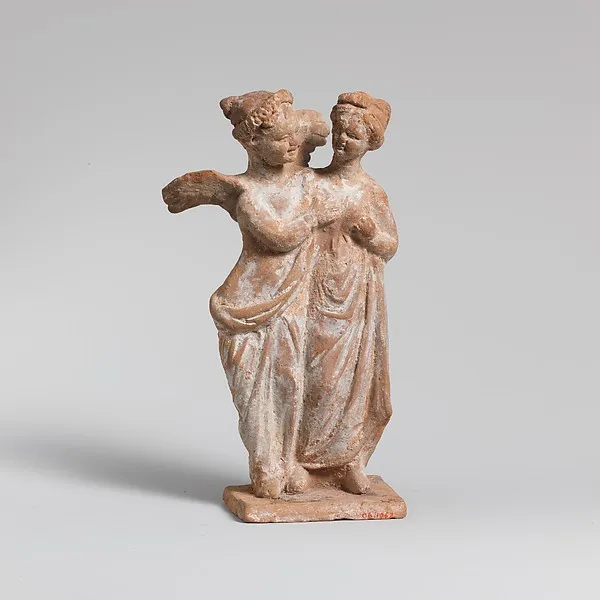
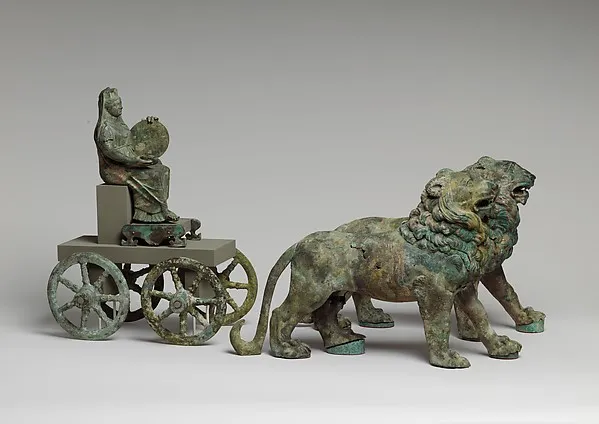
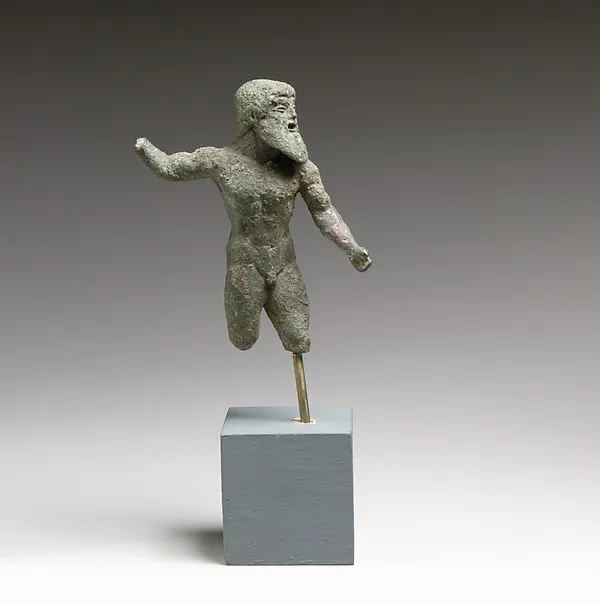
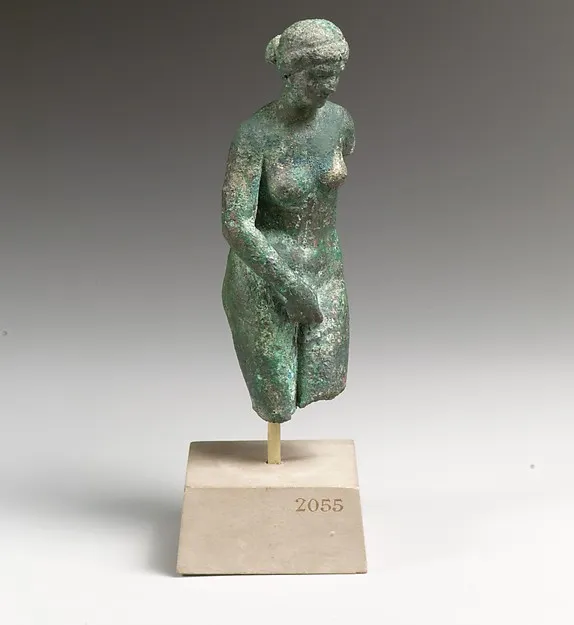
late 6th century BC–early 4th century AD アフロディーテの小像 この章に出てくる人物の図像。場面は対応していない→ この人物のページ176–206
And Heaven came, bringing on night and longing for love, and he lay about Earth spreading himself full upon her. Then the son from his ambush stretched forth his left hand and in his right took the great long sickle with jagged teeth, and swiftly lopped off his own father's members and cast them away to fall behind him. And not vainly did they fall from his hand; for all the bloody drops that gushed forth Earth received, and as the seasons moved round she bare the strong Erinyes and the great Giants with gleaming armour, holding long spears in their hands and the Nymphs whom they call Meliae all over the boundless earth. And so soon as he had cut off the members with flint and cast them from the land into the surging sea, they were swept away over the main a long time: and a white foam spread around them from the immortal flesh, and in it there grew a maiden. First she drew near holy Cythera, and from there, afterwards, she came to sea-girt Cyprus, and came forth an awful and lovely goddess, and grass grew up about her beneath her shapely feet. Her gods and men call Aphrodite, and the foam-born goddess and rich-crowned Cytherea, because she grew amid the foam, and Cytherea because she reached Cythera, and Cyprogenes because she was born in billowy Cyprus, and Philommedes because sprang from the members. And with her went Eros, and comely Desire followed her at her birth at the first and as she went into the assembly of the gods. This honour she has from the beginning, and this is the portion allotted to her amongst men and undying gods, -- the whisperings of maidens and smiles and deceits with sweet delight and love and graciousness.
But these sons whom be begot himself great Heaven used to call Titans (Strainers) in reproach, for he said that they strained and did presumptuously a fearful deed, and that vengeance for it would come afterwards.