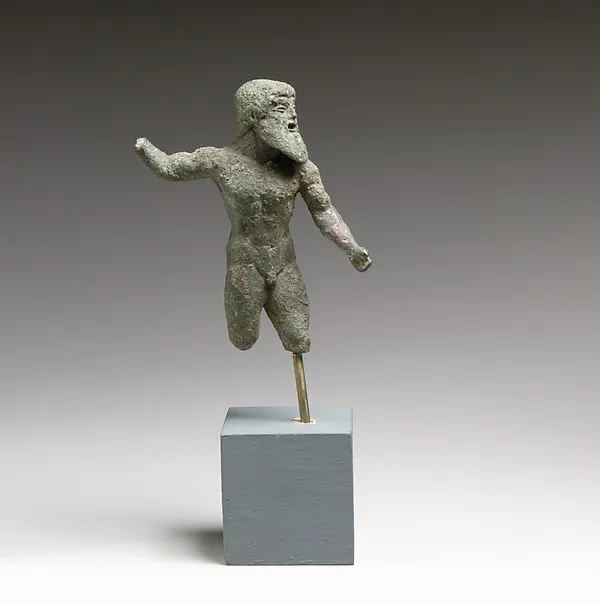
Having put to sea with all his ships, he came to the island of Aeolia, of which the king was Aeolus. He was appointed by Zeus keeper of the winds, both to calm them and to send them forth. Having entertained Ulysses, he gave him an oxhide bag in which he had bound fast the winds, after showing what winds to use on the voyage and binding fast the bag in the vessel. And by using suitable winds Ulysses had a prosperous voyage; and when he was near Ithaca and already saw the smoke rising from the town, he fell asleep.
But his comrades, thinking he carried gold in the bag, loosed it and let the winds go free, and being swept away by the blasts they were driven back again. And having come to Aeolus, Ulysses begged that he might be granted a fair wind; but Aeolus drove him from the island, saying that he could not save him when the gods opposed.
So sailing on he came to the land of the Laestrygones, and . . . his own ship he moored last. Now the Laestrygones were cannibals, and their king was Antiphates. Wishing, therefore, to learn about the inhabitants, Ulysses sent some men to inquire. But the king's daughter met them and led them to her father.
And he snatched up one of them and devoured him; but the rest fled, and he pursued them, shouting and calling together the rest of the Laestrygones. They came to the sea, and by throwing stones they broke the vessels and ate the men. Ulysses cut the cable of his ship and put to sea; but the rest of the ships perished with their crews.